Trepidations

Yesterday shook me up a bit. I’ve been thinking about my concerns and how to manage them. Some are general, some are specific.

Working backwards, I need to leave the dock here Friday noon fully provisioned and ready to race. Start is Saturday morning.

In general, I have confidence in the boat. There are a few mechanical items still on my to-do list to ensure reliable diesel power for charging and propulsion, but apart from that the basic boat is ready. Rig is fine, electronics are fine, safety gear is fine. Got a nice harness and dual tether today as well as a bit more required equipment.

My biggest concern after yesterday was the mainsail. Not the damage, but the realization that it was too much for me to handle solo. So I don’t mourn its passing.

I’ve been reluctant to just add slugs to the other main. I’m not sure I could do it in time, and I’d like to be sailing. Plus I wouldn’t mind a smaller and/or more cruisey main for distance racing, at least at this point in my development. Don’t need to kill a good racing main needlessly.

After some research I found that the Tartan Ten has a main that’s maybe a foot short on the hoist and 6″ on the foot. And there are T10 mains kicking around here that I can beg, borrow or steal. I’m hoping I can try one out tomorrow.

My second concern is getting peak performance from the autopilot. And I think that requires a wind input. I went carefully through the legacy Ockam system today, and discovered that there is no output that I can feed to the AP. So I’m weighing either a) leaving as is, b) replacing masthead wind sensor, which would mean shutting down the Ockam system and installing a couple of MFDs in the cockpit, or c) installing a network compatible wind unit on top of the radar and leaving the existing ockam system intact. Leaning towards b but with time and budget concerns. If there is a cheap expedient option for c I’d jump on it but think b is the right solution.

I’m super excited with the boat, but have to make sure I can keep it under control and take care of myself. That’s mostly what I’m thinking about now.

Weather continues to be weird here. Raining today. I’m watching the long term forecast anxiously. At this point it looks like a fast race. I just hope it’s not too fast 🙂

It also occurred to me while recapping yesterday’s sail that I was pretty single minded in testing and learning and didn’t pay much attention to the comfort and security of my guest. Sorry Bob. Hopefully we can have a more relaxed sail another time.

Still have to fit in my qualifying sail as well. Down to the wire… Fortunately the weather looks settled for early next week. Plan is to head out midday Monday.

Sailing Day 4

My old friend Bob is in Chicago for a few days and I promised him a sail. Today was lovely, sunny, not too cold and a 15-20 knot SW breeze with some heavier puffs.

I haven’t gone out sailing in more than a week. Was busy getting all the electrics and electronics sorted, and have been helping with a couple of projects in the boat yard, including helping to re-commission this Southern Cross 52. It’s a cool boat, like a giant Tin Lizzie.

I picked Bob up downtown, then we sailed there from Calumet. Put up the reaching spinnaker for a fast ride north.

I wasn’t having any trouble keeping the boat under the rig with the sheets cleated on a broad reach while hand steering. The spinnaker is pretty forgiving on trim. We were blasting along at 10-13 knots. The autopilot didn’t do as well. We had a couple of slow motion roundups under AP. It took a bit of doing to get the boat going back downwind. I’m sure filling the windward ballast tank would have helped a lot.

A few times we sailed through the back of a wave and took solid water back to the cockpit. Pretty fine bow. Again, I’m sure ballast would have helped.

Bob and I had our PFDs on. I was wearing my auto-inflate vest and he had a house vest on.

I was trying to do things myself, and was on the leeward side trying to get the spinnaker sheet under the boom in preparation for a takedown when we broached again under AP. I found myself lying in the water with the lifelines under me, looking up at Bob who was clinging to the high side. The cockpit is close to 10′ wide at that point.

My life vest inflated with a big pop, and that didn’t help my mobility. So I focused on staying inside the boat, grabbing a stanchion and kicking around to make sure I was straddling the middle lifeline.

After a few seconds the boat popped up to maybe a 30 degree heel, Bob reached down to help me get back up, and we were off again. I stayed at the helm and instructed Bob on the takedown.

We reached into Monroe Harbor under main, and I dropped Bob off and sailed back to Crowley’s. If I’d been ambitious I would have put a reef in and raised the small jib, but I’d had enough action for the day.

The old main is toast. We gave it a good thrashing and it now has three or four major holes and a torn batten pocket. It’s more tired than I had originally thought. I’m also very concerned about my ability to handle the sail while hoisting and dropping. It’s a big sail with long battens. I guess I’ll be exploring having slugs put on the newer main.

Sorry no pics. I had wisely emptied my pockets of electronic devices on the way out.

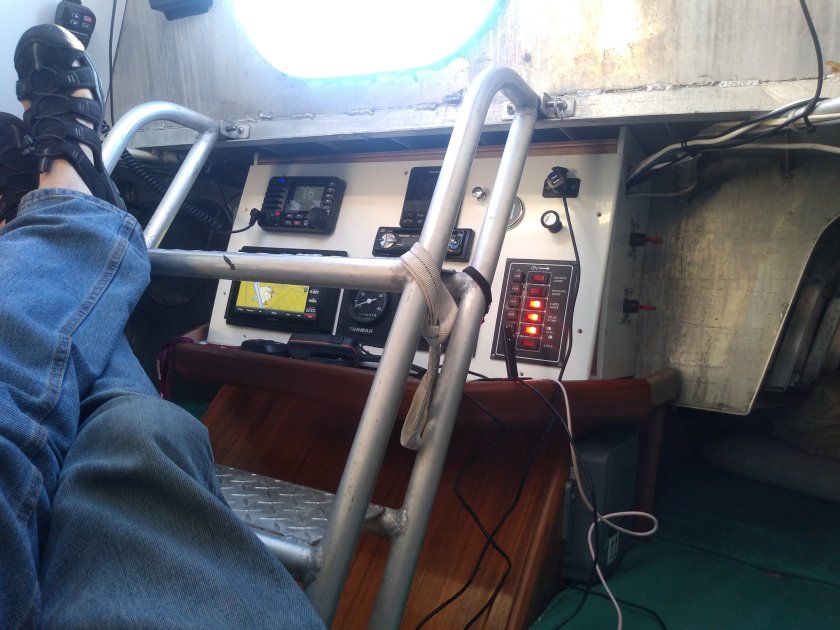
I’m quite happy with the remote for the AP, and my nav area that I’ve built.

I was thinking about jack lines today and think I have a plan. Will run them tomorrow and pick out a harness and tethers. I want to make sure I fetch up inside the boat if I get thrown or swept the wrong way as I did today.

I wasn’t originally planning on a challenge of this magnitude. It’s pretty cool to think I could be sailing straight up the lake right now with average speed into the teens. But hard to imagine it being sustainable all the way.

I do want to try to get wind data to the autopilot. Everything I read says it’ll help, particularly down wind. I really don’t want to be steering.

I also still have to do my 24 hour solo sail. Weather looks fair and gentle starting Sunday so will likely head out then.

Here are some pics of recent work. I bought some stick-on dimmable LED lights and hung the AP remote holster and VHF mic at the companionway.

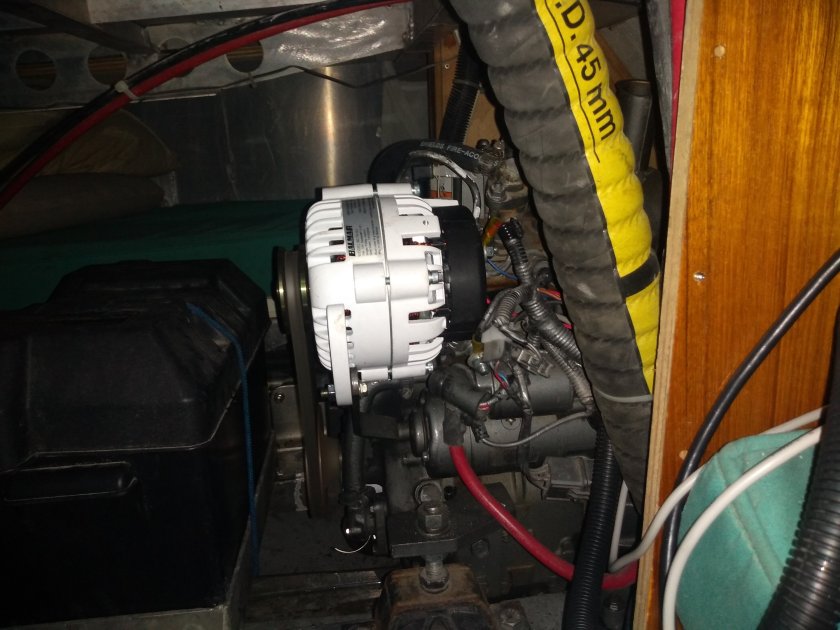
A new Balmar 70 amp alternator and external regulator. Have a new group 31 AGM battery and Balmar SG200 monitor, which allows me to monitor consumption and charge rates and battery SoC and health. There is a switch at the nav station that reduces full power alternator output by 50% as it’s only a 9 hp motor. So I can do heavy bulk charging when sailing but cut back when under power.

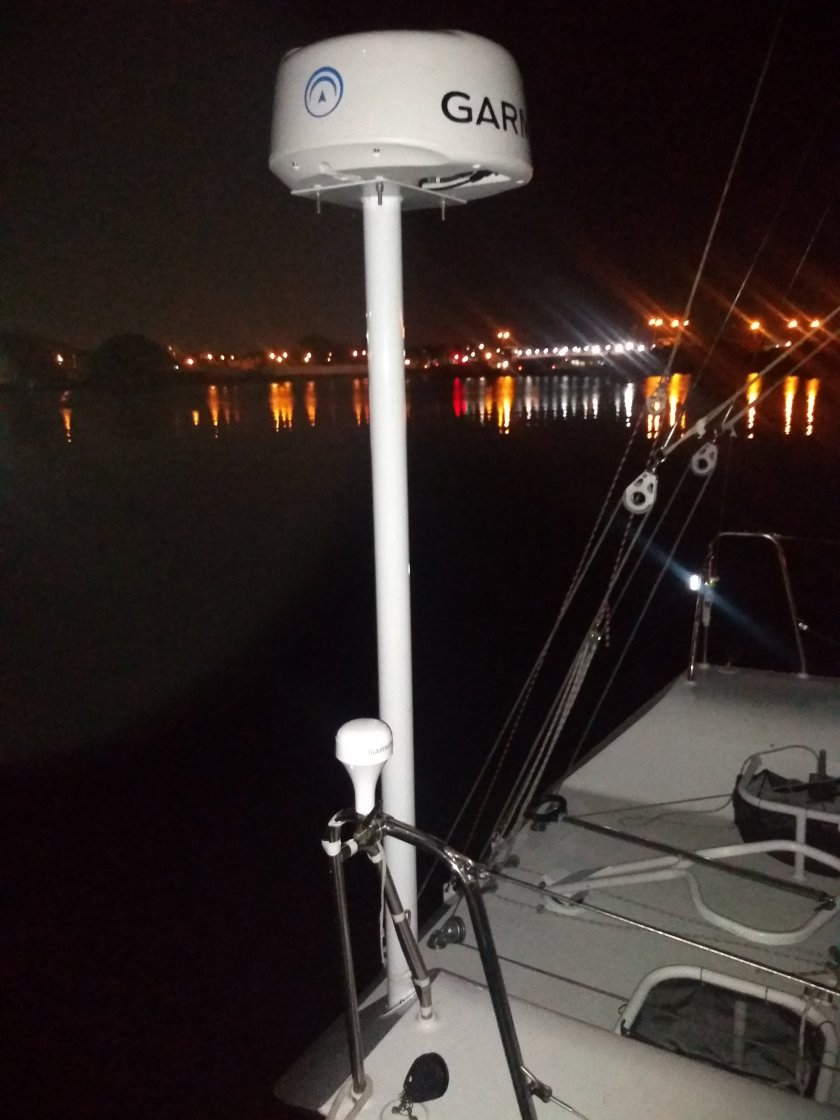
Radar seems to work fine when heeled. I also mounted a new GPS antenna, as the reception inside the boat is terrible.

I changed the running lights to LED. Also mounted a second antenna to the stern rail, normally dedicated to AIS reception but available for VHF if dismasted.

This is my emergency power supply, has 12 with jump and USB.


No pics, but with the exception on the old wind instruments everything is networked on NMEA 2000 and/or Seatalk NG and I’ve combined the two into a single network. Seems to be working as expected. Using routing to drive the AP is not allowed in GLSS events, and I haven’t tried it yet but assume it will be functional. Lots of data to play with!

Electronics

I installed new electronics in Mazurka last fall, and had a lot of experience using them over the winter. They bring impressive capabilities.

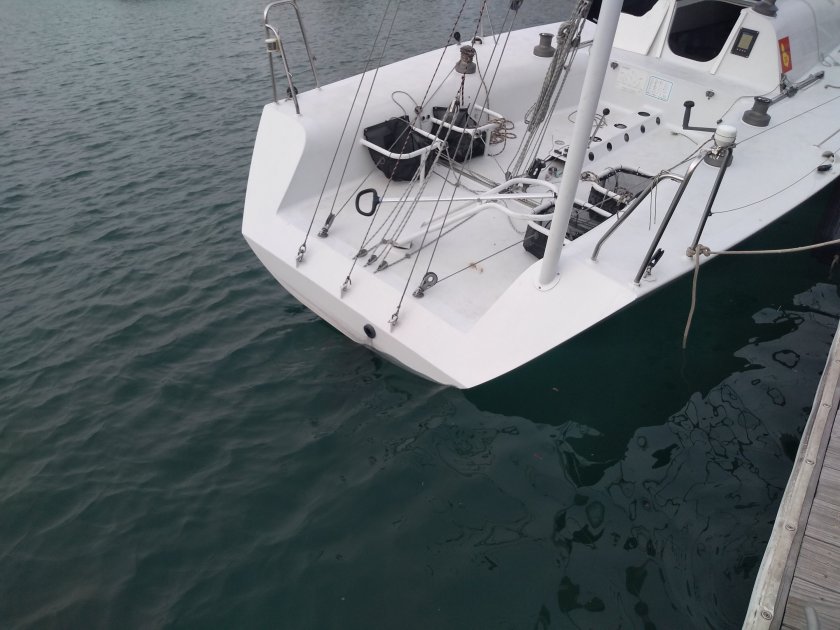
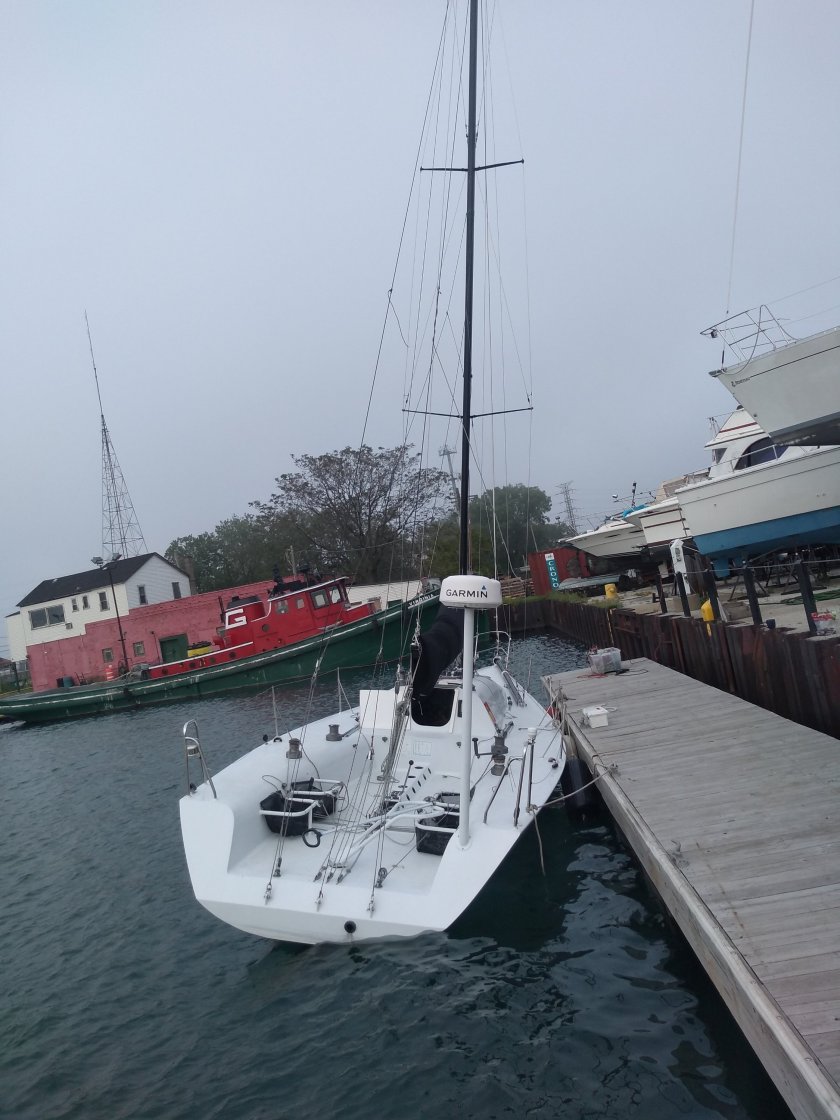
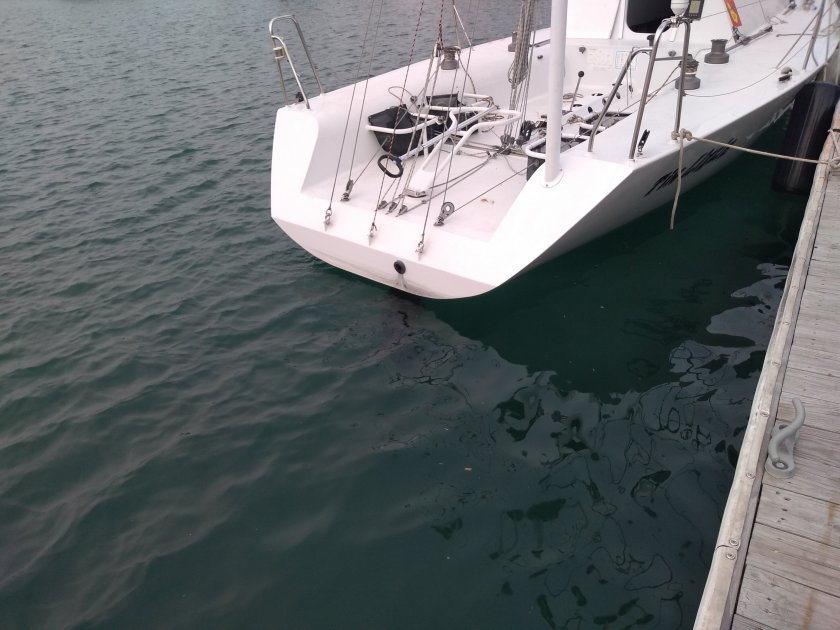
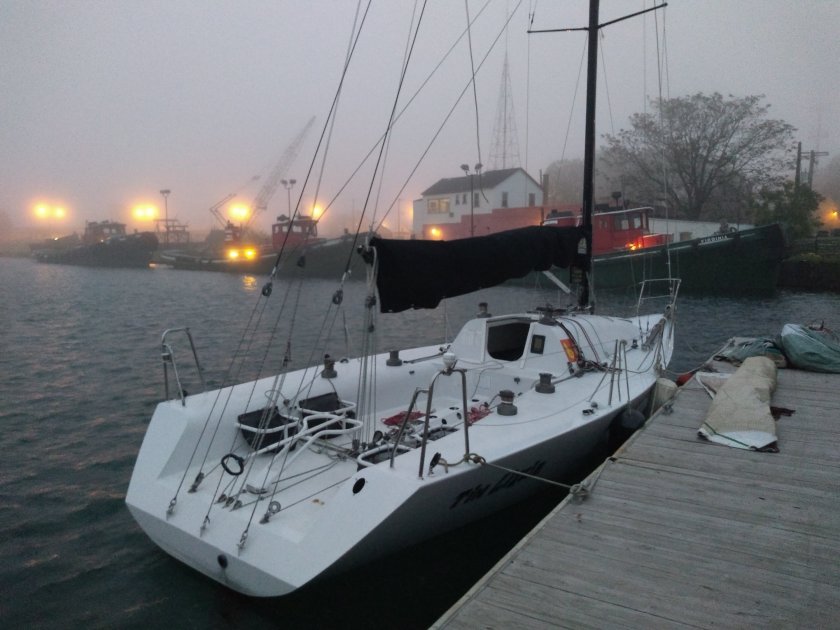
As I was developing a use case for Tin Lizzie I started thinking about electronics almost immediately. An early decision was to share stuff between the two boats. I don’t have any plans to use them simultaneously. So I brought the radar and MFD with me from Mazurka. Left cables in place and installed new cabling in TL. Manfred built a very nice radar tower on the transom.

An autopilot is a necessity. I’ve been consistently impressed with Raymarine/Autohelm over the years in sailboats, and the unit on Mazurka has performed flawlessly except near big metal things like bridges and that one barge.

I might have gotten away with a unit that sits in the cockpit and connects to the tiller, but really didn’t want to. So I opted for a Raymarine ev200 with a linear drive. That required cutting a section of the stern tube out, keying the shaft, installing a tiller arm, and putting a gaitor seal over the shaft. Manfred did most of that as well. I’m very pleased with the final installation and have high expectations for the AP.

There was no VHF on the boat. I installed a masthead antenna. I didn’t bring my VHF, as I wanted a more modern unit that could communicate with the MFD better than the unit I got last year for Mazurka. I got a Standard Horizon GX6000. Pretty fancy unit. I brought my RAM mike from Mazurka and got new cabling for Tin Lizzie.

There is an old Ockam system on Tin Lizzie that gives boat speed, wind information, and depth, along with calculated information like VMG. It was bleeding-edge in its day. I thought I’d try it out.

After finishing up the drive install, I turned today to the cabling and placement of the displays and controls. Unpacking boxes, reading installation instructions and owners manuals. Getting a good handle on the NMEA2000 network topology. Once I discovered that it’s a CAN bus like my old Prius everything clicked.

My main focus is on the backbone and making sure everything is talking to everything else. I’ve pretty much decided not to cut any holes in the boat for instruments until I’ve sailed it for a while. On deck I’ll have a wireless remote control for the AP, remote mic on a long flexy cable, and the existing Ockam displays. I’m tucking the heads under the companionway.

My original plan was to try to feed boat speed and wind data from it to the bus, which requires a network adaptor and k knowledge on setting it up. But the more I look at that and contrast it with a new package from Garmin that isn’t that expensive and would play seamlessly with the other devices. I’m often guilty of this kind of scope creep. But I’m already behind schedule and over budget, so I may just leave it as is and plan a future replacement. Race starts in less that two weeks. Gulp.

I’ll post some pics when I’m done.

Into the coffin

An experienced installer with an assistant probably could have done this in a couple of hours and two trips into the stern of the boat. It took me at least ten trips and a long day. But it’s done. The drive unit for the autopilot is ready for trial. I’m happy with the install.

The big challenge was the access. Manfred warned me it was a bit tight. Here’s the trip. This is looking aft at the port quarter berth with the cushion pulled out

Then headfirst into the tunnel on my back

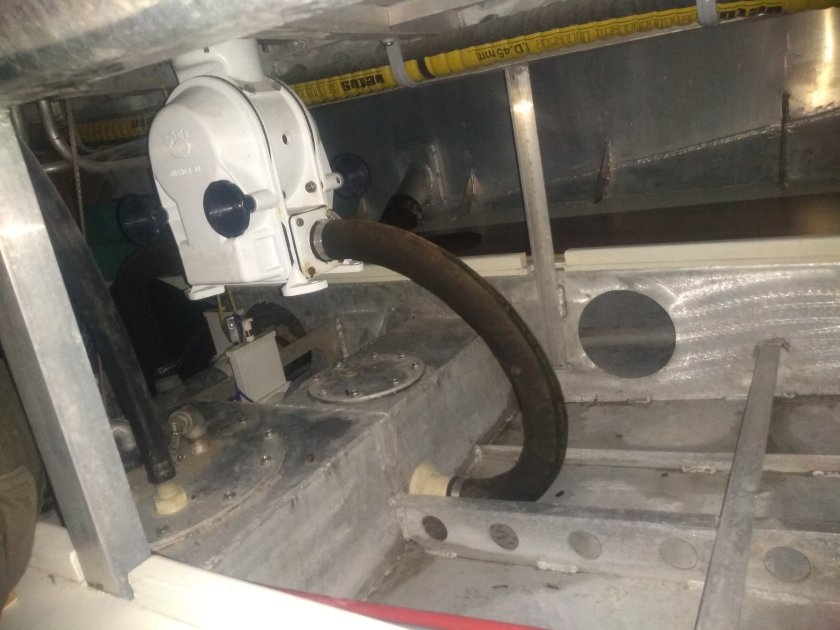
Slide past the motor, water ballast system. Things are getting tight.

A pause when the berth ends

And then a wiggle down and under to lie on the inside of the hull. No room to turn over.

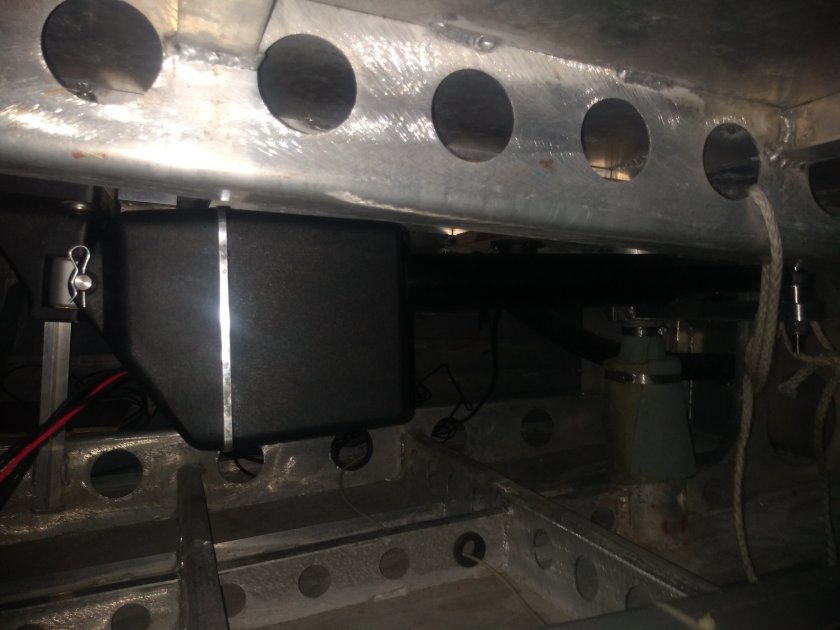
Hard to get good pics in that space :-). But you can see the drive hanging here. There’s a rudder sensor as well. I used lines to act as rudder stops.

There is no better way to get to know a new boat than to crawl around like this, and I’ll be better able to troubleshoot or jury rig if there’s a failure. But a helper would have really made a difference today.

Question of the day

Random question of the day: is Michael Barbaro computer generated? When I asked Google I didn’t get a ready answer.

I’m pretty sure I’ve listened to every episode of The Daily, and before that a politics podcast he hosted during the 2016 presidential election. I’m also a digital subscriber to the NYT and read their top stories pretty much daily.

Now obviously he’s a real person. But there’s a huge talented team producing these shows, and strong editorial oversight. I guess what I’m saying is it’s a big deal for the NYT. They’re breaking new ground.

I’ve come to the conclusion that an awful lot of Michael’s content comes from a keyboard. He’s laid down a gazillion words and phrases, and a computer does the rest.

If we can watch dead actors on the screen thanks to the miracles of CGI maybe we can listen to Michael host the daily in perpetuity…

Lemme know what the real story is.

Personal Safety

I had a long-time GLSS sailor stop by earlier. We had a nice chat about safety equipment and protocols. He told of a sailor who died in an earlier race while being dragged on his tether after going over the side.

I’m still thinking through my equipment list and protocols for personal safety. I have a wireless remote control with the autopilot and will keep it tethered to me. Hopefully that can help to mitigate the risk of being dragged at speed. I need a harness and a couple of tethers. Jack lines will be easy on this boat. It’s a clear run from end to end.

If wearing a tether is a PFD necessary? I’ve been looking at combo devices. And what about all these other devices that people carry? I don’t strive to be the Techno Bill of sailing, but there are several attractive safety devices – PLBs that send a distress signal to SAR via satellite, hand held radios to call for help, AIS distress beacons. But strap it all on and add a knife and a flashlight and it seems a little much. I need to find the right balance, and cover risks beyond just racing. I want to be able to sail solo confidently and safely in any conditions I’m likely to encounter.

Electrical

I’ve been thinking lots about power for TL this spring. Specifically electrical power. I ruled out solar panels and wind/water generators quickly. It’s a racing boat. Solar may be possible, but not until I figure out where it might live.

The fuel cells look promising, but they’re not cheap, and fuel requires some advance planning. Maybe in the future. I participated in a discussion on Trawler Forum not too long ago on this. I should also say that I’ve learned a lot about 12v batteries and charging systems hanging out on that forum.

But I have a little diesel under the cockpit, a Yanmar 1GM. And I don’t mind the noise of running it while sailing. Currently there is a single group 31 battery well mounted.

My house needs are minimal. Charging mobile devices and my Juul. Running lights are LED. It’s the autopilot, navigation system and instrumentation that requires power. I have radar as well, and plan to use it extensively for watch keeping. Digital, it only draws 2 amps. I’m estimating a continuous load of 10 amps for everything.

The stock alternator on the Yanmar is rated at 35 amps. After some consideration of options I decided to spring for a new Balmar 70 amp replacement alternator. Good stuff, with a solid external regulator. I’ve also ordered a Balmar monitoring system that will track and report charge and discharge rates, state of charge, etc. If I have to run the motor for an hour once every 4-5 hours I can live with that. I’m going to continue to use a single battery, but am considering a jump pack for backup.

One of the cool features of this alternator is that it can be wired with a switch that will limit it to 1/2 power. Since I’m over propped I’ll dial it back when under power.

It should be here tomorrow.

Water Ballast

I’ve documented the system here in an earlier post. Today I filled the tanks at the dock. That required getting the pump working. I still have a small leak in the pump but it’s an easy fix. No other leaks that I can see. I’m planning to replace/lube the gate valves as well before I leave. That requires a lift, but it’s an easy job.

I filled both tanks first. The transom was a good 3″ lower.

A couple of hours later I checked for leaks, then drained the port tank. Whoa. I almost lost my tool box off the deck.

This boat has a lot of stability. I guess I was prepared to see the heel induced by the full tank but it was still dramatic.

With the tanks empty the waterline is just below the transom

Note the radar. Got that finally installed today.

I’m really looking forward to sailing in a breeze. Looks like it’s light through to early next week.

Sailing Day 3

Weather here in Chicago has been consistently weird. It was sunny and warm all afternoon. Now it’s foggy everywhere.

I spent part of the day studying the rig more closely. Ran the main up with a good dosing of mcLube on the bolt rope. That made a big difference.

I haven’t yet sailed in anything over 10 knots, but playing with the rig at the dock it didn’t feel like I could get enough mast bend. That led to some minor adjustment of the checkstays, but the rig still looked way too straight. So I loosened the rig, kicked the butt of the mast aft, and retuned. That put about two inches of prebend in and a very sloppy headstay with slack backstays. That seems like a better starting point, though it still doesn’t seem bendy enough. I was getting maybe 8″ max, and pretty even.

I was ready to go for a sail and had invited a few of the CYY folks, but no takers.

I took a pass around the yard and ran into Taylor and Pam. They’re a lovely couple who live in Iowa and have a Shannon 43 that they’re working on making perfect. I applaud the effort. Classic very well put together boat. I met them in the fall and we got reacquainted again this spring. Such is the boatyard rhythm.

Happily they took me up on an offer of a quick sail, and off we went. We motored through the bridge, raised sails, and went for a sail. Taylor and Pam steered and I did all the work. I think they enjoyed it.

Things went reasonably smoothly. The last few feet of the main raise is difficult. Going to try easing the outhaul next time. I still have a few lines to finalize, but I’m feeling pretty comfortable with the layout. I’m reminded all the time that this is a racing boat. While I’ve been lamenting the bare bones steel coffin interior it’s just about perfect on the outside and moving around is easy and secure. Lines, stoppers and winches are well placed.

We had the small jib up going out and the small spinnaker up coming back. Spinnaker is in good shape. I think it’s the newest sail. It’s got quite a different shape. I can see using it lots.

The boat powers up nicely in the light wind, even with the working headsails. I’m excited by the performance potential. But it’s also a big rig with not much in the way of sail handling conveniences. I think I can do it, and I’m willing to experiment and evolve as I learn more.

We sailed back through the bridge and into our berth. I left all the sails on deck and packed up myself later. I rolled the main and put the boom cover on. That works OK.

Looking forward to getting out in more wind. In the meantime it’s electronics install time. As usual I’ve suffered some further scope creep, and I’m replacing all the current electronics. But that’s for a different post.

I’ve been writing this post from a seat looking at the rig. The jumper strut sort of turns it into a masthead rig in some respects. I think I shouldn’t impose my 80s based thinking on this boat too much. It also occurs to me that I haven’t spent much time trimming composite mains. It makes sense that less bend is needed. I’ve done enough thinking on this. Time to get some sailing time in.